Summary
- Ethereum is a network for smart contracts and decentralized applications; ETH is its native asset and is also used to pay gas and other transaction fees.
- Ethereum and Bitcoin have different purposes, supply, and consensus mechanisms: ETH supports a programmable network, while Bitcoin is presented as a store of value and medium of exchange.
- You can buy a fraction of ETH to match a budget; the described flow covers verification, funding, a market order, and choosing between platform custody and a personal wallet.
- Staking may lock ETH and delegate operations to a third party; separate market and platform risk, enable 2FA, protect private keys, and confirm current terms and obligations.
Buying ETH is faster and more accessible than it looks: all you need is your phone and a few minutes, and you can start with very small amounts, without having to buy a whole coin. You do not need to be a technology expert to take the first step, but you do need to understand the basics of what you are buying and how to do it safely.
One key detail before starting: Ethereum is the name of the network and ETH is the cryptocurrency you use. Even though in everyday conversation you might hear “I bought an Ethereum”, technically what you hold in your wallet is ETH.
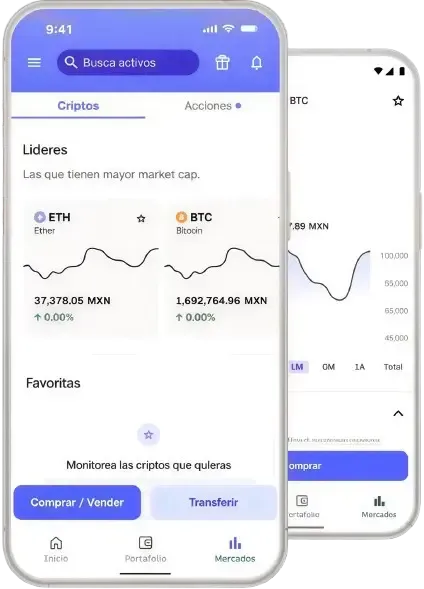
In this article we explain how Ethereum works, how buying fractions of ETH lets you match your budget, and the detailed step by step to make your first purchase safely using Bitso.
What is Ethereum and what is it for?
Ethereum is an open-source blockchain network created in 2015 by Vitalik Buterin. Its native coin is Ether (ETH). Unlike Bitcoin, which was designed mainly as a store of value, Ethereum was built as infrastructure for smart contracts and decentralized applications (dApps).
A smart contract is, in essence, a program that runs automatically when certain conditions are met, without a person or institution having to step in manually. Most of the applications running on Ethereum are built on that foundation.
ETH serves two functions within the network: it is the asset you buy, and it is also what you use to pay the fees for each transaction or interaction with the network (what is known as “gas”).
Some of the main uses of Ethereum:
- DeFi (decentralized finance): financial services that operate without traditional intermediaries.
- NFTs: unique digital assets recorded on the blockchain.
- dApps: applications that run in a decentralized way on the network.
- Staking: a mechanism to take part in validating the network in exchange for rewards (we explain it below).
- Stablecoins such as USDC: digital currencies that aim to hold a stable value against the dollar and circulate on the Ethereum network.
By market capitalization, Ethereum ranks second among cryptocurrencies, behind Bitcoin. Unlike Bitcoin, which has a fixed supply of 21 million units, Ethereum has no defined maximum issuance limit. That does not mean it is issued without control: the pace of issuance depends on protocol rules, not on a discretionary decision.
How much does one Ethereum cost?
The price of ETH changes constantly because it trades on open markets 24 hours a day.
The price of Ethereum moves due to a combination of factors: macroeconomic conditions, adoption of smart contracts and applications on the network, trading volume and the general mood of the crypto market at a given moment. None of these factors makes it possible to anticipate where the price will move in the future.
If you want to see the real-time quote, you can check the price of ETH directly on Bitso.
A common question among people who want to invest in Ethereum is whether they need to save up the full price of one ETH to get started. They do not: on Bitso you can buy a fraction of ETH, not the whole token.
Ethereum vs. Bitcoin: how do they differ?
It is common to arrive at Ethereum after first hearing about Bitcoin. Although both are cryptocurrencies and share blockchain technology as a foundation, they do not solve the same problem. Here are the main differences:
| Characteristic | Bitcoin (BTC) | Ethereum (ETH) |
|---|---|---|
| Main purpose | Store of value and medium of exchange | Infrastructure for smart contracts and decentralized applications |
| Year created | 2009 | 2015 |
| Maximum supply | 21 million units | No fixed maximum limit |
| Consensus mechanism | Proof of Work | Proof of Stake |
| Main uses | Store of value, payments | DeFi, NFTs, dApps, staking, stablecoins |
Bitcoin and Ethereum are not mutually exclusive. They are different assets, with different roles within a portfolio, and many people who hold Bitcoin also hold ETH for different reasons.
Fractions of Ethereum: invest with what you have
With the price of ETH in the thousands, buying a whole token can feel out of reach. A fraction of ETH is exactly that: a portion of the token. If you have a small amount available, you buy the proportional part of ETH that this amount represents at the price of the moment.
You do not need the full price of an Ethereum to get started. With whatever you have available, you buy the corresponding fraction, and that fraction gives you a proportional claim on the value of the asset.
How to buy Ethereum with Bitso
You do not need to understand trading to buy ETH. From your phone, you can complete the process in a few minutes through Bitso.
The process, in general terms, looks like this:
- 01
Open your account
Registration is 100% digital and the identity verification (KYC) process is automatic.
- 02
Fund your account
In the app, selecting "Deposit" shows the funding methods available for your account.
- 03
Buy ETH from the app
Search for Ethereum, decide how much you want to buy and confirm the order at the market price.
- 04
Decide where to keep your ETH
You can leave it on the platform, which tends to be the most convenient option if you are just starting out, or transfer it to your own wallet with your own private keys, if you prefer direct control over the asset in the long term.
You can read more about how the identity verification (KYC) process works before opening your account.
The Bitso app works as the digital medium through which you can discover and use these services. The obligations and supervision that apply depend on the country and on the services each company provides, so it is worth reviewing that information before choosing where to operate.
Your money is capable of more than sitting still. Buy Ethereum through Bitso.
What is Ethereum staking and how does it work?
Ethereum runs on a mechanism called Proof of Stake. In simple terms, those who take part in validating the network “lock up” ETH as collateral, and in exchange for contributing to the security of the network they can receive rewards.
There is an important difference between staking directly, which usually requires considerable amounts and technical knowledge, and doing it through a platform, where the process is simplified but you delegate that operational work to a third party.
Staking also involves a lock-up period for the asset in certain schemes: during that time, you cannot freely dispose of the ETH you put into staking. Before taking part, it is worth understanding under what conditions you can withdraw your ETH and what happens if the price moves while it is locked.
You can read more about what staking is and how it works in our dedicated article.
Is it safe to buy Ethereum?
It is worth separating two types of risk that often get mixed together in this question.
The first is market risk: the price of ETH can rise or fall considerably over short periods, and that does not depend on the platform you use to buy it.
The second is platform risk: who you leave your money with, under what framework they operate and what security practices they follow. The obligations and supervision that apply depend on the country and on the services each company provides, so it is worth reviewing that information before choosing where to operate.
On the user side, there are basic practices that reduce risk directly: enabling two-factor authentication (2FA), never sharing your private keys with anyone and being suspicious of any message asking for your passwords or verification codes. Bitso will never ask you for confidential information such as passwords, credentials or verification codes by email, phone or message.
The fact that an operation can be completed in a few steps does not change the risk of the asset. The ease of the process and the risk of the investment are two different things.
Discover what your money is capable of.
The information provided is for informational purposes only and does not constitute financial or legal advice. Please note that the cryptocurrency market is highly volatile, so Bitso International does not guarantee an increase in the price of Bitcoin or any other digital asset we offer. Seek professional advice and do your own research before making investment decisions. For more information, see our Risk notice.
Frequently asked questions about buying Ethereum
Less than you think. On Bitso you do not buy a whole ETH: you decide how much you want to invest and you receive the fraction of ETH that this amount represents at the price of the moment. That removes the psychological barrier of «I need to save up the price of a whole token» and lets you decide the amount based on what you have available, not on the price of the asset.
Yes, and that is exactly how most purchases on Bitso work. Instead of buying a whole ETH, you buy the proportional part that corresponds to the amount you enter. That fraction gives you a proportional claim on the value of the asset: if ETH rises or falls, your fraction moves in the same proportion as if you held the whole token.
No investment is free of risk, and it is worth separating market risk from platform risk. Security is also complemented by your habits as a user: enabling two-factor authentication (2FA) and never sharing your keys with anyone reduces risk directly. Remember that Bitso will never ask you for passwords or verification codes by email, phone or message.
You can check the updated quote for ETH directly on the ETH price page on Bitso, without needing an open account. Inside the app, that same price is used as the reference when confirming your buy order.
The tax treatment of cryptocurrencies depends on your particular situation: buying and holding ETH is not the same as selling it at a profit, and the rules can vary depending on where you file and under what regime. Bitso gives you access to your account statements so you have a clear record of your operations, but the best recommendation is to review them with a tax advisor before filing your return.
Yes. Vitalik Buterin founded Ethereum in 2015 alongside other co-founders, and he remains a visible figure in the developer community and at the Ethereum Foundation, although the network no longer depends on a single person: its development is driven by a broad community of programmers and organizations around the world.