Summary
- Learning before you invest lowers the chance of making impulsive decisions, such as selling out of fear at the first price drop.
- The basic concepts worth mastering are risk, liquidity, time horizon, diversification, and compound interest.
- Identifying your risk profile and practicing with small amounts lets you apply what you learn without putting your savings or your emergency fund at stake.
- A reliable source is transparent about risks and does not promise guaranteed returns.
You want to start investing, but you don’t know where to begin and you’re afraid of making an impulsive decision. Without a clear foundation, it’s easy to panic at the first price drop or copy other people’s decisions. This guide shows you, step by step, how to learn to invest with solid fundamentals, from the basic concepts to putting them into practice.
Why learn before investing your money?
Learning before you invest lowers the chance of making impulsive decisions with your money. When you don’t understand why an asset’s value rises or falls, it’s easier to sell out of fear as soon as the price drops, or to abandon an investment at the first sign of volatility in the financial markets.
Learning is not a requirement you complete once before you start. It is an ongoing process: you keep understanding each concept, each financial instrument, and each decision better as you gain real experience, even after taking your first steps with small amounts.
This guide is not a catalog of where to invest your money, but a path to help you understand the whole process: the basic concepts, your risk profile, and how to practice before committing significant capital.
Basic concepts to master before investing
These are the basic concepts you need to master before investing: risk, liquidity, time horizon, diversification, and compound interest. They are part of essential financial education, no matter how much capital or budget you have available.
| Concept | Simple definition | Everyday example |
|---|---|---|
| Risk | The possibility that the value of an investment rises or falls unpredictably. | It’s like the weather: you can prepare, but you can’t control whether it rains. |
| Liquidity | How quickly you can turn an investment into available cash without losing value. | Cash in your pocket is more liquid than a piece of land that takes months to sell. |
| Time horizon | How long you plan to keep your money invested before you need it. | Saving for a wedding next year is not the same as saving for retirement in thirty years. |
| Diversification | Spreading your money across different assets instead of concentrating it in one. | It’s the classic advice not to put all your eggs in one basket. |
| Compound interest | Returns generated on accumulated gains too, not just on the original amount. | It’s like a snowball that grows faster the more it rolls. |
Risk and potential results are related, though without any guarantee: there is no formula that ensures more risk will bring more return. For example, comparing fractional stocks and ETFs with fixed-income instruments helps you see how the level of risk changes between different financial products.
How to identify your risk profile as an investor
Identifying your risk profile as an investor means recognizing how much volatility you are willing to tolerate based on your financial goals and your time horizon. The most common profiles are conservative, moderate, and aggressive, and they depend on your risk tolerance, your time frame, and your financial goals, not on how much money you have.
Ask yourself these questions to find your profile:
- How would you react if your investment lost value within a month?
- When do you expect to need that money back?
- How clear is your financial goal for that money?
- Could you sleep well if the market had a bad week?
Your risk profile is not a fixed label: it’s worth reviewing from time to time, especially if your income, goals, or personal situation change. You can define your investment strategy with this guide and build a plan that fits your personal finances.
How to practice with small amounts before investing more
Practicing with small amounts lets you apply what you’ve learned without putting a significant part of your savings or your emergency fund at stake. It is a way to test your decisions with limited risk before investing larger amounts in investment instruments you are just getting to know.
Useful habits for practicing:
- Start with an amount you’re willing to lose without it affecting you.
- Keep a simple record of each decision and its outcome.
- Regularly review what worked and what didn’t, and adjust your strategy.
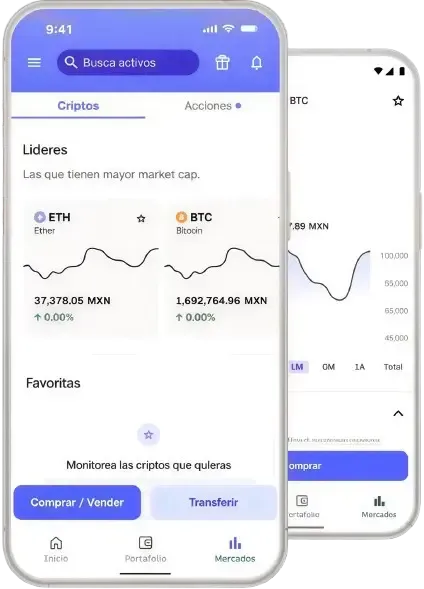
For example, in countries where Bitso operates, you can practice by buying small amounts of cryptocurrencies in the Bitso app to experience how the market moves without risking a significant sum. It’s a way to get familiar with the volatility of this type of asset before allocating more capital to it.
Where and how to keep learning from reliable sources
There are different types of reliable sources for continuing to learn about investing and financial education.
- Free financial education courses from official institutions.
- Investment simulators for practicing without real money.
- Introductory personal finance books.
- Podcasts or channels specializing in financial education.
Two verifiable examples are the U.S. Securities and Exchange Commission’s Introduction to Investing on Investor.gov and the investor education resources from FINRA, both from official or regulatory bodies and free for users. If you live outside the United States, check whether your country’s financial regulator or central bank offers similar resources.
How to recognize a reliable source
A reliable source is transparent about risks, does not promise guaranteed returns, and is backed by a recognized institution or a regulator.
Be wary of anyone or any account that promises guaranteed results, unrealistically high fixed returns, or access to inside information. No serious financial adviser guarantees gains: that is a clear warning sign of possible fraud.
Common beginner mistakes when learning to invest
These are the most common mistakes beginners make when learning to invest, and they are worth avoiding from the start.
- Wanting immediate results. Long-term investing tends to work out better than chasing quick gains.
- Investing money you need in the short term. Keep that money in your emergency fund, not in investment instruments.
- Not diversifying. Spreading your money across different assets, such as stocks, bonds, or index funds, reduces the impact of any single bad decision.
- Panicking when prices drop. Review your time horizon before selling out of fear.
- Copying other people’s decisions without understanding them. What works for someone else may not fit your risk profile.
- Stopping learning once you start investing. Financial education is an ongoing process, not a starting point.
Many of these mistakes stem from common beliefs that hold beginners back and misconceptions about how investing in the stock market works, which are worth clearing up before making decisions.
How to keep learning while you practice on Bitso
Learning to invest doesn’t end when you read the last article or finish a course: it is reinforced through consistent practice and through platforms that let you go at your own pace. In countries where it operates, Bitso brings together clear information, access to supported cryptocurrencies, and tools designed so that every decision, however small, rests on something you truly understand.
Whether you want to take your first steps by buying small amounts of crypto or simply explore how the market works before committing more capital, Bitso supports you with transparent information and no unrealistic promises.
Discover what your money can do with the Bitso app when you choose to learn before you invest.
The information provided is for informational purposes only and does not constitute financial or legal advice.
Frequently asked questions
There is no fixed time frame, because learning to invest is an ongoing process that adapts to your pace and your financial goals. You can understand the basic concepts, such as risk, liquidity, and diversification, in a few weeks if you dedicate consistent time. However, gaining real confidence to make decisions takes longer, because it is built through practice, reviewing results, and exposure to different financial markets over months.
You don't need to study finance professionally to start investing. It's enough to understand a few basic concepts, such as risk profile, time horizon, and compound interest, and complement them with reliable sources of financial education. What matters is moving forward gradually, without rushing, and building your knowledge little by little while you practice with small amounts that don't put your budget or your financial goals at stake.
Saving means setting money aside without exposing it to market fluctuations, usually to have immediate liquidity or to build your emergency fund. Investing means putting money into financial instruments in the expectation of a return, while accepting some level of risk and volatility. Both are part of your personal finances: it usually makes sense to build a savings cushion first and then start investing with amounts you can afford to put at risk.
Yes, there are ways to learn to invest without risking real money, such as investment simulators that replicate market conditions with play money. You can also study investment strategies, read about different investment instruments, and follow financial education sources before committing your own capital. At some point, though, it helps to practice with small amounts, because real experience teaches things that theory alone doesn't cover.
You can start learning to invest at any age, although most investment platforms require you to be of legal age to open your own account. Before then, you can read about personal finance, understand what a budget is, and get familiar with concepts such as compound interest and risk profile. Starting early gives you more time to let your decisions mature calmly.
Investing means making decisions based on an analysis of your goals, your risk profile, and how the asset works, with a defined time horizon. Speculating, on the other hand, seeks quick gains from short-term movements in the financial markets, almost always with less analysis and more exposure to large losses. Understanding this difference helps you keep realistic expectations and avoid impulsive decisions.