Summary
- Some instruments accept low entry amounts, such as government securities or funds that hold them, savings accounts, fractional crypto, fractional shares, and contributions to a retirement account.
- With $10 you can open an account, learn how an instrument works, and start a habit, but you should not expect meaningful income in the short term.
- An asset's volatility applies equally to small and large amounts, so investing a little does not reduce the proportional risk.
- How consistently you contribute matters more than the amount you start with.
Many people believe investing requires thousands of dollars in savings, so they put off the first step. The reality is different: some instruments have very low entry amounts.
This article explains where you can put your first $10 and what to expect from that amount.
Can you really invest with $10?
Yes, in many places it is possible to invest with $10 thanks to instruments and platforms that have lowered their minimum entry amounts. That does not mean $10 will change your financial situation overnight. It is a real starting point, not a formula for getting rich or a promise of guaranteed results.
Investing a small amount makes sense as a way to learn how an instrument works, not to expect a significant gain in a short time. It is an exercise in financial education and personal finance, not a play to make quick money.
What you can (and can’t) achieve with $10
With $10 you can take concrete, if limited, steps within your saving and investing strategy. Before deciding where to put it, it helps to be clear about what is realistic to expect and what is not.
What you can achieve with $10:
- Open an investment account and get familiar with the platform.
- Understand how a specific financial instrument works.
- Buy a real fraction of an asset, such as a stock or a cryptocurrency.
- Start building the habit of investing consistently.
What you can’t achieve with $10:
- Generate meaningful income in the short term.
- Replace an emergency fund.
- Pursue a significant gain in highly volatile instruments.
A generic example puts it in perspective: if a hypothetical instrument paid 5% a year, $10 would generate just $0.50 in a year. The figure is small because the starting amount is small too.
No $10 investment strategy should promise you financial freedom or passive income. It is an exercise in learning and building a habit as you start shaping your portfolio.
Where you can put your first $10
These are realistic options for your first $10, with a look at how far that amount goes, within the broader landscape of options for investing with little money.
| Option | Is $10 enough? | Who does it make sense for? |
|---|---|---|
| Government securities or funds that hold them | It depends on the platform’s current minimum | People looking for something predictable and lower risk |
| Savings account or certificate of deposit | Often yes, but the return is usually low | People who prioritize access to their money over return |
| Fractional crypto | Yes, it can go toward a specific asset | People who already understand volatility and want crypto exposure |
| Fractional shares | Often yes, it can buy a real fraction of a company | People who want to learn how the stock market works |
| Contributions to a retirement account | Depends on the plan’s rules | People thinking long term who won’t touch the money soon |
Government securities or funds that hold them
Some governments sell short-term debt securities directly to individuals through official platforms; in the United States, for example, Treasury bills can be bought through TreasuryDirect. Minimum purchase amounts vary by country and program, and $10 may not reach the minimum. Funds or ETFs that hold government securities may be another route, sometimes in fractions through a broker. Check current minimums before investing.
Savings account or certificate of deposit
With a savings account or a certificate of deposit you can often set aside $10, but the return may not keep up with inflation, and a certificate may charge a penalty for early withdrawal. Compare rates and terms, and check whether the institution is covered by deposit insurance in your country and up to what limit.
Fractional crypto
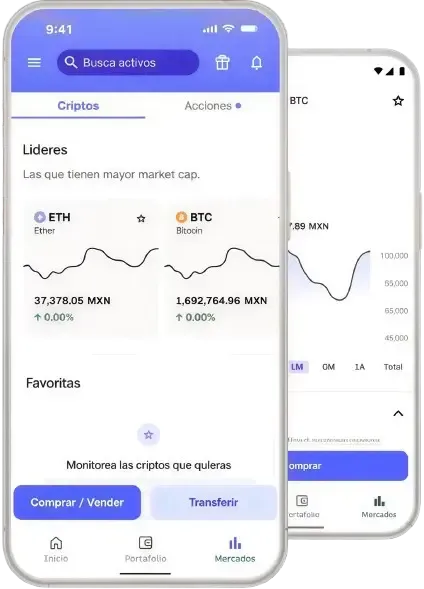
In countries where Bitso operates, the app provides access to supported cryptocurrencies, and $10 can go toward a specific asset. Volatility applies equally to small and large amounts. Availability, fees, and assets depend on your country and account.
Fractional shares
Fractional trading lets you buy a portion of a share instead of the whole share. That way, $10 can be enough for a real fraction of a large U.S. company, one more option within the broader landscape. Bitso does not provide stock access outside Mexico, so for stocks elsewhere you should use an appropriately authorized broker and verify its registration independently.
Contributions to a retirement account
Contributing to a retirement account is another low-amount option for the long term. Depending on your country, this may be a pension fund or a tax-advantaged account, such as an IRA or a 401(k) in the United States. It is not a Bitso product: review the rules, limits, and eligibility with your plan provider.
What you shouldn’t do with just $10
With $10 there are practices that make no sense, no matter how eager you are to see results. The amount is too small to justify the risk some strategies involve.
- Speculative day trading doesn’t make sense: fees and the time involved are out of proportion to the amount.
- Chasing very new or niche crypto assets in search of a quick gain with that money isn’t a good idea.
- Constantly moving money between platforms over tiny differences in return isn’t worth it.
- Borrowing to invest an amount like this is never a good idea, no matter how attractive the opportunity looks.
Higher risk does not automatically mean higher return, and markets do not always recover within a set time frame, something that also shows up among the common myths about investing with little money.
How to choose where to put your $10 based on your goal
Choosing where to put your $10 depends on your time horizon, your risk tolerance, and the real goal behind that money. Looking for a short-term investment is not the same as wanting to try out equities.
If you want something predictable in the short term, look at lower-risk options such as government securities or the funds that hold them. If you want to learn how the stock market works, a fractional share is an accessible entry point through an authorized broker. If you already understand crypto volatility, use an amount you are willing to see move.
This is not a personalized recommendation, but a general guide for thinking through your decision. Everyone’s circumstances are different.
Why consistency matters more than the starting amount
Consistency matters more than the starting amount: what counts is not how much you put in the first time, but whether you contribute regularly. Growing your money depends on the habit of contributing every payday or every month.
This article doesn’t go into how money grows over the long term with consistent contributions; that is a separate topic. Here the message is simple: consistency is a habit, not a guaranteed projection.
Digital tools like the Bitso app can make it simpler to keep that habit with small amounts, since you can contribute at any time without extra paperwork.
Your first step, available in the Bitso app
Starting with $10 won’t change your life overnight, but it can be the first step toward understanding how your money moves when you invest it. In countries where Bitso operates, the Bitso app lets you buy small amounts of supported cryptocurrencies and get familiar with how investing works, without needing to save up a larger sum first.
No app can tell you exactly what will happen to your money, and no promise of guaranteed results should convince you to invest. What you can control is where you start and how often you come back to it.
Discover how to get started with the Bitso app, no matter how much you start with.
The information provided is for informational purposes only and does not constitute financial or legal advice.
Frequently asked questions
The minimum depends on the platform. Some brokers, government programs, and fintech apps accept low amounts to get started, while traditional full-service brokerages may ask for higher minimums, although this varies by institution. There is no single amount that applies everywhere: check the current conditions before opening your investment account.
It depends on how you buy them. Some governments sell securities directly to individuals through official platforms, while funds and ETFs that hold them may charge management fees, and brokers may charge their own costs. The most reliable approach is to review the current conditions, minimums, and fees directly with the official platform or provider before investing your $10.
Yes, at brokers that offer fractional trading you can buy a portion of a share instead of the whole share, so $10 may be enough for a real fraction of a large U.S. company. It is one more option within the broader landscape of ways to invest a small amount. Compare it with other instruments based on your time horizon and risk tolerance, and keep in mind that Bitso does not provide stock access outside Mexico.
A platform's security and an asset's risk are different things. A platform operating under a formal regulatory framework does not eliminate the volatility of cryptocurrencies: prices can rise or fall sharply in short periods. Investing $10 doesn't change that risk, because the crypto market moves in the same proportion regardless of the amount, so it helps to understand how to evaluate a cryptocurrency before putting your money into one.
It depends on the instrument you chose. Savings accounts usually let you withdraw your money, while certificates of deposit and some government securities may involve a penalty or a sale at market price before maturity. Crypto and fractional shares can be sold, but their value may be lower than what you paid if the market has dropped. That is why it helps to think about liquidity before investing, whatever the instrument.
Investing in the stock market usually requires opening an account with a brokerage, and some ask for minimum deposits higher than $10, although this varies by institution and some offer fractional shares with low minimums. If you are looking for equity exposure with small amounts, look into mutual funds, index funds, or ETFs, which are generally more accessible than other investments such as real estate.